


What is under-eye filler?
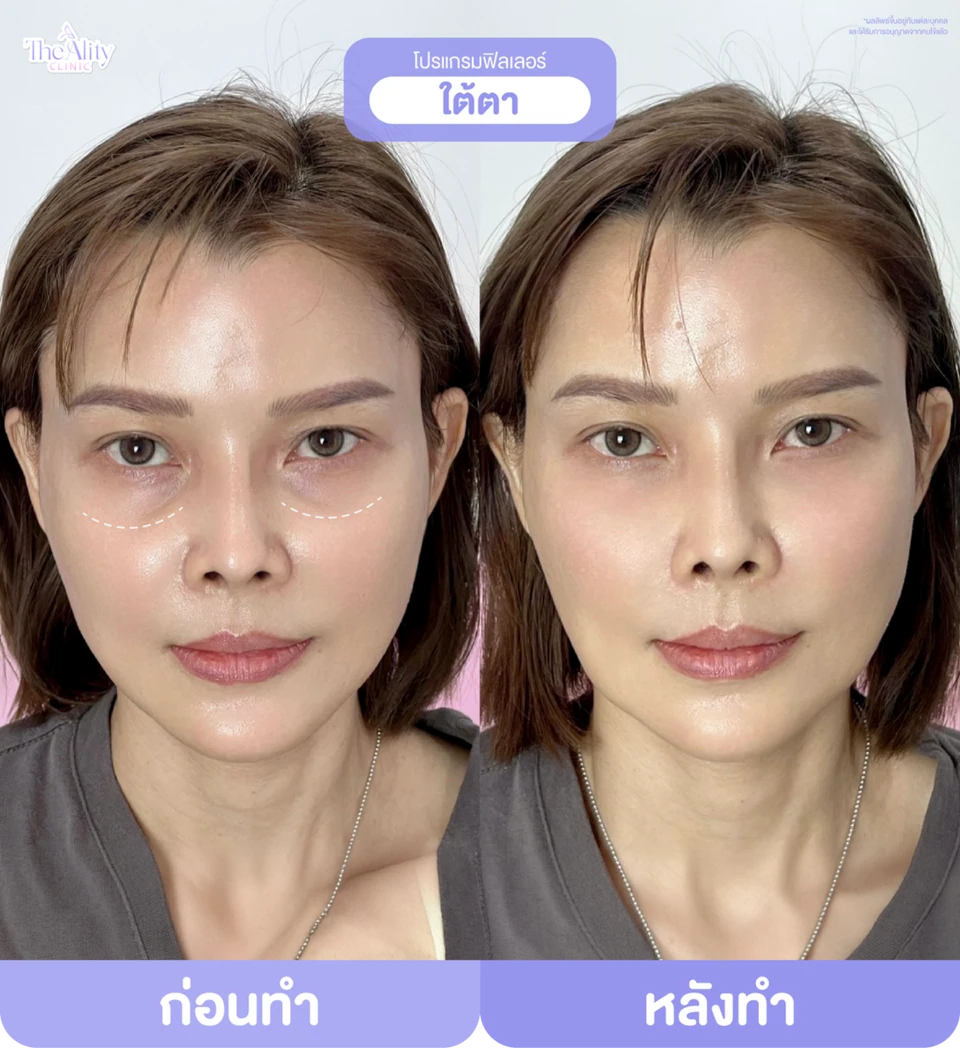
Under-eye filler involves injecting filler beneath the eyes in locations the doctor assesses as sunken or lacking volume.
The filler commonly used is Hyaluronic Acid (HA) which fills tissue and helps under-eye grooves blend more continuously with the cheeks.
Results depend on several factors, such as:
- Under-eye bone structure
- Under-eye fat volume
- Fold depth
- Skin thinness
- Sagging
- Filler amount and properties
- Injection technique and location
Highlights of the under-eye filler programme
- Helps fill sunken areas or grooves beneath the eyes
- Helps improve the transition between the under-eye area and cheeks
- May reduce shadows from deep under-eye grooves in some cases
- Amount and placement can follow individual structure
- Refines the under-eye area without surgery in suitable cases
- Can be combined with cheek and midface assessment for more balanced proportions
What can under-eye filler improve?
Under-eye filler can address concerns related to volume loss or under-eye grooves, such as:
Deep under-eye grooves
Helps fill grooves or sunken areas beneath the eyes.
Under-eye shadows from deep grooves
For some people, darkness may come from shadows cast by under-eye grooves. Adding volume in appropriate locations may make those shadows less noticeable.
An uneven transition between the under-eye area and cheeks
Helps smooth the transition between the under-eye area and midface.
Under-eye hollowing from age-related structural changes
With age, bone, fat, and tissue around the eyes may change. An assessment can determine whether filler is suitable for restoring volume there.
Can filler treat dark under-eyes?
Under-eye darkness has various causes, and filler cannot address every type.
Examples of causes include:
- Shadows from deep under-eye grooves
- Skin colour or pigmentation
- Blood vessels visible through thin skin
- Thin under-eye skin
- Sagging
- Under-eye bone and fat structure
If darkness comes from deep-groove shadows, filler may reduce the shadows in some people.
If mainly caused by pigmentation, blood vessels, or skin quality, other care methods may also be needed.
Can under-eye filler reduce eye bags?
Eye bags and under-eye grooves are different concerns, and some people have both.
Filler does not directly eliminate fat-related eye bags. In some cases, however, the doctor may adjust the groove below the eye bag with filler, smoothing the transition between the under-eye area and cheeks.
With very prominent eye bags, very loose skin, or markedly protruding under-eye fat, filler may not be the most suitable method, so assessment is always needed first.
Who is under-eye filler suitable for?
The under-eye filler programme may be suitable for people who:
- Have deep under-eye grooves
- Have sunken under-eyes or low volume
- Have under-eye shadows related to deep grooves
- Feel the under-eye-to-cheek transition is distinct
- Have age-related under-eye volume changes
- Want non-surgical under-eye adjustment and have structure the doctor considers suitable
Who may not be suitable for under-eye filler?
Under-eye filler may be unsuitable for certain conditions, such as:
- Very prominent eye bags
- Very loose under-eye skin
- A tendency to fluid-related under-eye swelling
- Inflammation or infection around the eyes
- Existing filler requiring prior assessment
- Darkness mainly from pigmentation
- Structural concerns better suited to another method
The doctor assesses whether filler or another approach is appropriate.
How many cc of under-eye filler are needed?
The amount varies individually, depending on groove severity, hollowing, under-eye structure, and whether the midface also needs adjustment.
The under-eye area requires precise filling, so amount should not be selected by cc alone.
The doctor assesses amount, location, and filler properties suited to each person’s structure.
Which under-eye filler should be selected?
Formulations differ in gel properties, elasticity, firmness, and water retention.
Several factors must be considered for the under-eye area, such as:
- Skin thinness
- Required filler placement depth
- Under-eye hollowing
- Filler water retention
- Smoothness after placement
- Movement of tissue around the eyes
The doctor should select filler suited to location and structure, rather than brand name alone.
Steps in under-eye filler treatment
1. Assessing under-eye structure
The doctor examines under-eye grooves, eye bags, groove depth, skin thickness, and the transition to the cheeks.
2. Analysing the cause of the concern
The doctor assesses whether visible darkness or grooves arise from volume, structure, shadows, pigmentation, or other factors.
3. Planning locations and amounts
Areas to fill are determined, including whether the cheeks or midface also need adjustment.
4. Preparing the area before injection
The area is cleaned and prepared before treatment according to clinic procedures.
5. Injecting filler according to the plan
The doctor gradually places filler in the assessed locations.
6. Checking after treatment
Balance is assessed and aftercare advice is provided.
How long does under-eye filler last?
The duration of results varies between individuals and depends on several factors, such as:
- Filler formulation
- Amount used
- Filler placement
- Patient’s original structure
- Individual metabolism
- Aftercare
Hyaluronic Acid filler gradually changes and decreases through the body’s processes over time.
Will there be swelling after under-eye filler injections?
Some people may experience swelling, tightness, needle marks, or bruising after treatment.
Skin around the eyes is relatively thin, so swelling may be more noticeable than in some other facial areas.
Wait for swelling to subside before assessing the final result.
If unusual symptoms occur, such as unusually severe pain, skin colour changes, visual disturbances, or concerning symptoms, contact the clinic or seek medical attention immediately.
Preparing for under-eye filler injections
Before treatment, tell the doctor about:
- Underlying medical conditions
- Any history of drug allergies
- Current medicines and supplements
- Previous under-eye or facial filler
- Previous filler dissolution
- Surgery around the eyes
- Procedures or laser treatment nearby
- Inflammation or infection in the treatment area
Aftercare following under-eye filler injections
Follow the doctor’s and clinic’s advice after treatment. In general:
- Avoid pressing, massaging, or rubbing under the eyes yourself
- Avoid forceful eye rubbing
- Avoid intense heat initially
- Avoid activities that may impact the face
- Keep the treated area clean
- Take medicines only as directed by the doctor
- Watch for abnormal symptoms after treatment
Is downtime needed after under-eye filler?
Generally, daily activities can resume, but swelling, needle marks, or bruising may occur.
For important events or activities, allow time for swelling and bruising to subside first.
Can under-eye filler form lumps?
Under-eye skin is relatively thin. An unsuitable filler type, amount, or placement may cause visible unevenness, lumps, or bulges.
A bluish or greyish skin appearance may occur in some cases if filler is too superficial.
Selecting appropriate filler and placement is particularly important beneath the eyes.
Can under-eye filler be dissolved?
For Hyaluronic Acid filler, the enzyme Hyaluronidase can help dissolve it when the doctor determines there is an indication.
A doctor should assess first because different post-injection under-eye problems can have different causes.
Can I add more after previous under-eye filler?
An assessment is possible, but first check existing filler amount, location, and any swelling or unevenness.
If brand, formulation, amount, and injection date are available, tell the doctor before planning the next treatment.
How does under-eye filler differ from cheek filler?
Under-eye filler
Focuses on adjusting grooves or sunken areas beneath the eyes.
Cheek or midface filler
Focuses on adding or restoring cheek volume, which may also support and improve the under-eye transition in some people.
Some cases need more than under-eye filling alone; the midface should also be assessed for balance.
Frequently asked questions
Assess the cause of under-eye concerns before choosing care
Similar-looking under-eye concerns may have different causes. Some have deep grooves, some have eye bags, some have dark skin colour, or several factors may coexist.
Under-eye filler planning should consider more than groove depth alone. Bone structure, fat, skin, and the midface should all be assessed.
Once the cause is understood, the doctor can determine where filler is appropriate, approximately how much is needed, or whether other methods should also be used.