


What is midface filler?
Midface filler involves injecting a filling substance into the midface or anterior cheeks to add volume, refine dimensions and fill areas of hollowing.
The filler generally used is Hyaluronic Acid (HA), which can fill tissue and refine shape in areas assessed by the doctor.
Results depend on several factors, such as:
- Midface bone structure
- Existing fat and tissue volume
- Degree of anterior cheek hollowing
- Under-eye and nasolabial-fold structure
- Age
- Filler amount and properties
- Injection technique and depth
Highlights of the midface filler programme
- Helps add or restore anterior cheek volume
- Helps refine midface dimensions
- Helps the transition between the under-eyes and cheeks look more continuous in some cases
- Can help adjust the relationship between anterior cheeks and nasolabial folds
- Helps improve symmetry between the two anterior cheeks
- Sites and amounts can be designed around each person’s facial structure
What can midface filler improve?
Add anterior cheek volume
Helps fill areas that look flat or hollow, adding dimension to the midface.
Refine the under-eye–cheek transition
Some people have a visible junction or hollowing between the under-eyes and anterior cheeks. Adding volume in suitable locations may help the area look more continuous.
Reduce nasolabial-fold prominence in some cases
If folds look prominent because of lost midface volume, anterior cheek filling may adjust the surrounding structure and change the overall appearance of the folds.
Add facial dimension
Appropriate anterior cheek dimensions can make the midface look more proportionate without filling until the cheeks look large.
Adjusting asymmetry
If left and right anterior cheek volumes differ, assessment can guide adjustment toward better balance.
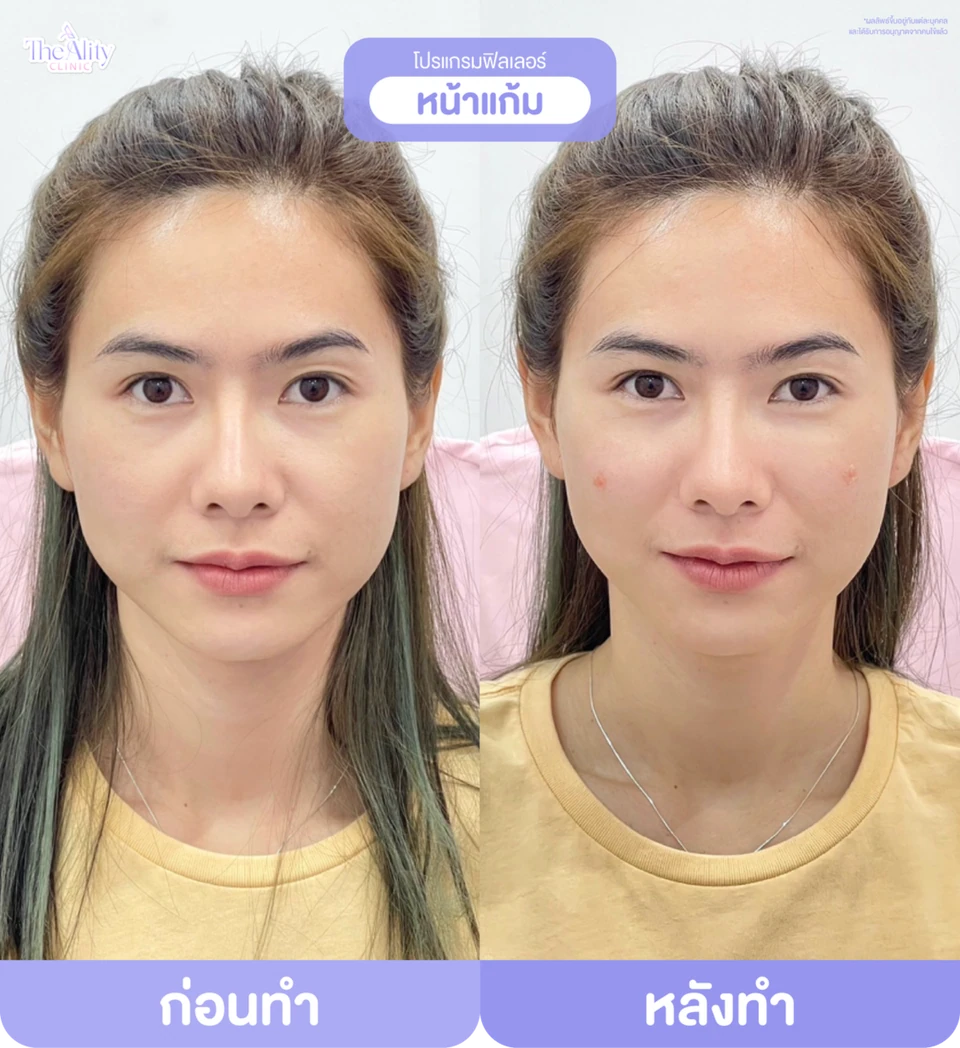
Who may suit midface filler?
The midface filler programme may suit people who:
- Have relatively flat anterior cheeks
- Have reduced anterior cheek volume
- Have a hollow-looking midface
- Want more anterior cheek dimension
- Have asymmetry between anterior cheeks
- Have age-related volume loss
- Want to refine under-eye–cheek continuity in suitable cases
- Want to adjust midface proportions without surgery
What causes flat or hollow anterior cheeks?
Anterior cheeks that look flat or hollow can have several causes, such as:
- Natural bone structure
- Low anterior cheek fat volume
- Age-related volume loss
- Weight loss
- Changes in tissue and facial structure
- Differences between the left and right face
Some people have always had flat anterior cheeks; others notice more hollowing as they age. Assess the cause before planning filler.
Can midface filler make the face look more dimensional?
The anterior cheek is one area that helps create midface dimension.
Adding volume in suitable locations may make the face look more proportionate and dimensional.
Especially from the front and oblique views.
However, the aim is not to make the anterior cheeks as prominent or full as possible.
It is to fill in a way that suits the proportions of the entire face.
Can midface filler make the face look younger?
With age, midface volume may decrease, making anterior cheeks look flat or hollow and potentially making the under-eyes or nearby folds look more prominent.
Restoring volume in appropriate locations may help the midface look more balanced overall.
However, filler does not address every type of laxity, skin-quality issue or age-related change. Each concern should be assessed separately.
Can midface filler lift the face?
The main goal of midface filler is to add volume and refine midface structure.
In some people, appropriate anterior cheek volume may change the overall facial appearance, but filler is not a direct skin-lifting programme.
With pronounced laxity, the doctor may assess other approaches as well.
How many cc of midface filler are needed?
The amount used varies according to:
- Degree of anterior cheek hollowing
- Bone structure
- Size of the area to adjust
- Differences between the left and right sides
- Volume loss in nearby areas
- Desired result
Some people may need only a small increase in dimension, while others may also need assessment of the under-eyes or nasolabial folds.
The number of cc should therefore not be the only factor in deciding.
What type of midface filler should be chosen?
Filler formulations have different properties, such as:
- Firmness
- Elasticity
- Tissue-supporting ability
- Spread
- Shape retention
- Water retention
The anterior cheeks may need both dimension and harmony with surrounding tissues.
The doctor therefore selects filler according to each person’s location, injection depth, original structure and desired results.
Midface filler procedure
1. Assess the midface
The doctor examines the anterior cheeks, under-eyes, nasolabial folds, cheekbones and facial symmetry.
2. Analyse the cause of hollowing
Assess whether the concern comes from structure, volume or age-related changes.
3. Planning locations and amounts
Define the areas to fill and consider whether nearby areas should also be adjusted.
4. Preparing the area before injection
The area is cleaned and prepared to reduce discomfort according to the clinic’s procedures.
5. Injecting filler according to the plan
The doctor gradually places filler at the assessed locations and depths.
6. Check balance after treatment
Assess the shape from the front and oblique angles, and provide aftercare instructions.
How long does midface filler last?
The duration of results varies between individuals and depends on several factors, such as:
- Filler formulation
- Amount used
- Injection location and depth
- Each person’s original structure
- Metabolism
- Aftercare
Hyaluronic Acid filler gradually decreases through the body’s processes over time.
Will there be swelling after midface filler?
Some people may have swelling, tightness, tenderness, needle marks, or bruising after treatment.
Initially, anterior cheeks may look fuller than the final shape because of swelling. Wait for symptoms to decrease before reassessing results.
If unusual symptoms occur, such as unusually severe pain, skin colour changes, or concerning symptoms, contact the clinic or seek medical attention immediately.
Preparing for midface filler injections
Before treatment, tell the doctor about:
- Underlying medical conditions
- Any history of drug allergies
- Current medicines and supplements
- Previous anterior cheek or facial filler injections
- Previous filler dissolution
- Facial procedures or surgery
- Inflammation or infection in the treatment area
Aftercare for midface filler injections
Follow the doctor’s and clinic’s advice after treatment. In general:
- Avoid pressing, massaging, or rubbing the injected area yourself
- Initially avoid sleeping with pressure on the anterior cheeks
- Avoid intense heat
- Avoid activities that may impact the face
- Keep the injection area clean
- Take medicines only as directed by the doctor
- Watch for abnormal symptoms after treatment
Does midface filler require recovery time?
Daily activities can generally be resumed, though some people may have swelling, needle marks, or bruising.
If you have an important event or activity, allow time for post-treatment symptoms to subside beforehand.
Can midface filler make the cheeks large or the face swollen?
Midface filler adds volume, so it can change the shape of the midface.
The goal is not to make the cheeks as large as possible, but to add volume only where needed to suit facial structure.
Too much filler may make the midface look overly full or heavy. Amounts and sites should therefore be assessed appropriately.
How does midface filler differ from hollow-cheek filler?
Midface filler
Focuses on the central and anterior cheek area to add volume, refine dimensions or improve under-eye–cheek continuity.
Hollow-cheek filler
Focuses on filling lateral cheek hollows or depressions to help the cheek contour look more continuous.
Some people may have both anterior and lateral cheek hollowing. Assess how much volume each area needs.
How does midface filler differ from nasolabial-fold filler?
Midface filler
Focuses on adjusting midface volume and structure.
Nasolabial-fold filler
Focuses on folds running from beside the nose toward the mouth corners, or structures associated with fold depth.
In some cases, prominent nasolabial folds may relate to lost anterior cheek volume, so filling only the folds may not be necessary.
How does midface filler differ from under-eye filler?
Under-eye filler
Focuses on grooves or hollowing under the eyes.
Midface filler
Focuses on the midface further below and helps adjust cheek volume.
The two areas are related. In some people, anterior cheek hollowing makes the under-eye junction more visible, so assess both together before planning.
Do both anterior cheeks need equal filler amounts?
Not necessarily.
Each person’s left and right face may naturally differ in bone, fat and tissue volume.
The doctor may choose different amounts for each side to make the overall result look more balanced.
Can midface filler be dissolved?
For Hyaluronic Acid filler, the enzyme Hyaluronidase can help dissolve it when the doctor determines there is an indication.
Assess the existing filler first to identify its location, amount and the nature of the problem.
Can I add more after previous midface filler?
Additional filler can be assessed, but existing filler should first be checked for any remaining amount and its location.
If you know the previous brand, formulation, amount and timing, tell the doctor before treatment.
Is midface filler dangerous?
The midface has blood vessels and important structures. Assessment and injection should be performed by a doctor who understands facial anatomy.
As with filler elsewhere, side effects or complications can occur, from swelling, bruising, or pain to uncommon but important complications such as vessel occlusion.
If unusually severe pain, skin colour changes, or visual disturbances occur after treatment, contact the clinic or seek medical attention immediately.
Frequently asked questions
Refine anterior cheek dimension to suit the midface
The anterior cheeks form an important connection between the under-eyes, cheekbones and nasolabial folds. Volume changes here can therefore affect the overall appearance of several areas at once.
Midface filler should therefore focus on more than making the cheeks fuller: analyse where volume is missing and which areas should remain natural.
The doctor assesses midface structure from several angles before choosing appropriate sites, amounts and filler for each person.