

What is Botox for wrinkles?
Botox for wrinkles involves injecting Botulinum Toxin into muscles that cause expression lines.
The medicine helps reduce nerve-to-muscle signals, temporarily decreasing activity in the injected muscles.
With less muscle movement, lines caused by repeated wrinkling, frowning, or smiling become less noticeable.
Highlights of Botox for wrinkles
- Helps reduce expression lines
- Can treat several areas, such as the forehead, frown area, and outer eye corners
- Doses can be adjusted to individual muscle strength
- Can reduce wrinkles while retaining natural expressions
- The procedure does not take long.
- No lengthy downtime
Which areas can be treated?
Forehead lines
These horizontal lines appear when raising the eyebrows. Frequent forehead muscle use may make them more noticeable.
Botox helps reduce movement in these muscles, making forehead lines appear softer.
Frown lines
These lines between the eyebrows appear when frowning or looking serious.
After injection, these muscles contract less, making frown lines look softer.
Crow's feet
Often noticeable when smiling or laughing, they arise from activity in muscles around the eyes.
Botox reduces some movement, making lines at the outer eye corners less visible when smiling.
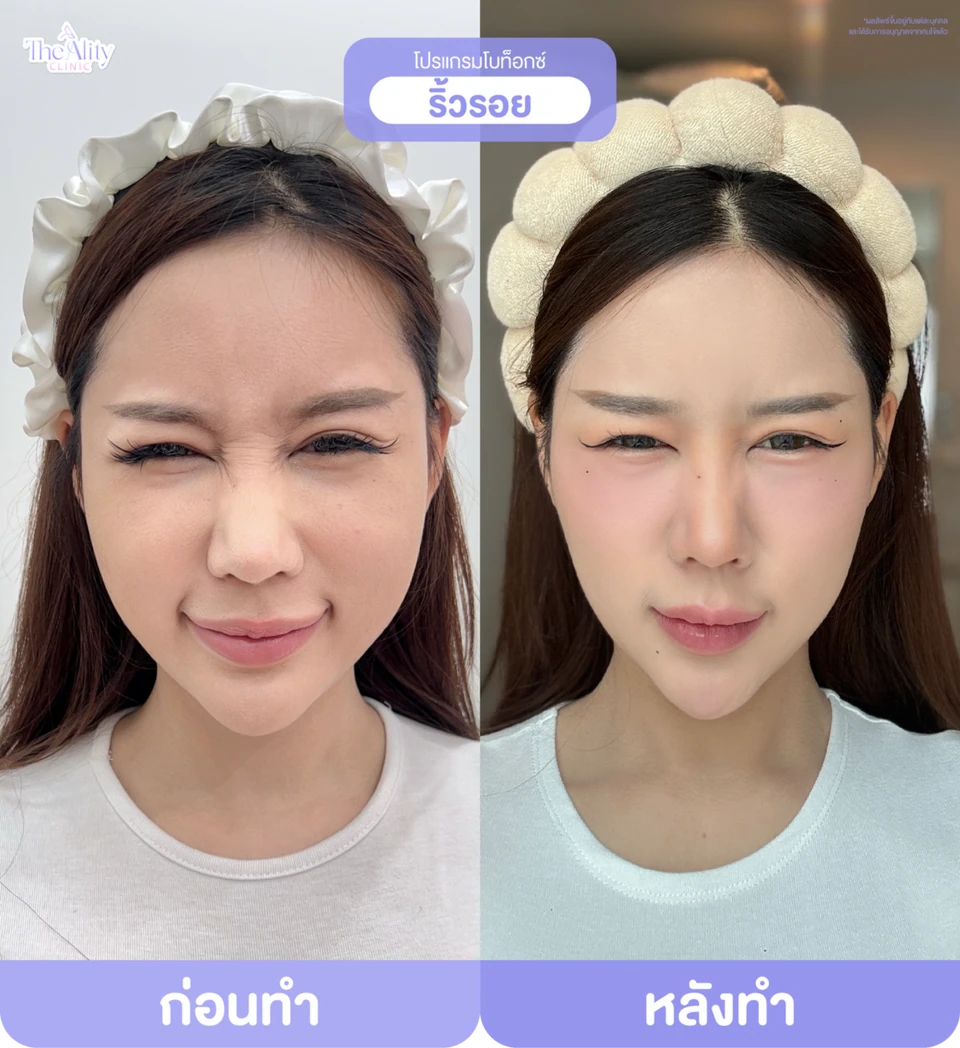
Who is it suitable for?
It may suit people who:
- Have forehead lines when raising their eyebrows
- Have frown lines
- Have crow's feet when smiling
- Feel their wrinkles are becoming increasingly noticeable
- Want fewer wrinkles while keeping a natural appearance
- Have had Botox and want reassessment before repeat injections
Which wrinkles can Botox help?
For lines noticeable during facial movement, such as forehead lines when raising the eyebrows or crow's feet when smiling, Botox addresses the cause directly because muscle activity is the main factor.
However, deep lines visible even at rest may also involve skin changes and established creases.
In this case, Botox can reduce repeated movement, but the lines may not disappear completely in one treatment.
Will my face look stiff?
It does not have to look stiff.
Results depend on injection sites and doses. Treatment can reduce wrinkles while allowing eyebrow movement, smiling, and facial expressions.
Before injection, tell the doctor you want a natural result and do not want an overly immobile face.
Can Botox help prevent lines from deepening?
Repeated muscle movement is one cause of wrinkles becoming more noticeable over time.
Less muscle movement means less repeated skin folding, helping reduce the forces that make existing lines more pronounced.
However, wrinkles also relate to age, sun exposure, and skin quality, so Botox cannot address every type of wrinkle.
At what age should treatment begin?
There is no fixed age.
Some younger people use their forehead muscles frequently and already have noticeable lines, while some older people still have few wrinkles.
The actual wrinkles should guide the decision more than age.
How many units are needed?
Doses vary because muscle strength and face shape differ.
The doctor considers:
- Intended injection sites
- Muscle strength
- Eyebrow shape
- Eyebrow elevation and facial expressions
- Wrinkle prominence
- Desired results
The goal is a dose appropriate to each person's muscles, rather than the highest possible number of units.
Can several areas be injected at the same time?
Yes. Several areas can be treated together, for example:
- Forehead + frown area
- Frown area + outer eye corners
- Forehead + frown area + outer eye corners
The doctor first assesses all the muscles together because the areas are interconnected, especially the forehead and eyebrows.
Can forehead injections cause brow drooping?
This can happen if sites or doses do not suit the muscle activity.
Forehead muscles raise the eyebrows. If activity is reduced too much, some people may feel forehead heaviness or that their eyebrows sit lower.
Before injection, eyebrow shape, eyelids, and eyebrow-raising habits should be considered together.
When do results appear after injection?
Botox does not show its full effect immediately after injection.
After treatment, muscle movement gradually decreases and wrinkles soften as the medicine takes effect.
Wait for the full effect before assessing results, and do not rush to arrange extra injections early on yourself.
How long does Botox for wrinkles last?
Botox effects are temporary.
Over time, muscles gradually move more again, and expression lines may start to return.
Duration differs by person according to muscle strength, dose, and the body's response.
How often is repeat treatment needed?
Not everyone needs repeat injections after the same number of months.
When muscle movement starts returning and lines become more noticeable, return for the doctor to check whether more treatment is needed.
How do Botox for wrinkles and fillers differ?
Botox
Suitable for lines caused by muscle movement, such as forehead lines, frown lines, and crow's feet.
Fillers
Used to restore volume or fill grooves related to facial structure and volume loss.
They work differently and cannot replace one another for every concern.
Botox wrinkle injection steps
1. Assess wrinkles and facial movement
The doctor asks you to raise your eyebrows, frown, or smile to identify which muscles cause the lines.
2. Plan the injection points
Choose sites and doses appropriate to the face shape.
3. Clean the skin
Prepare the area to be injected.
4. Inject Botox
Each injection point takes little time.
5. Provide aftercare advice
You can resume normal daily life after treatment while following the doctor's instructions.
Aftercare
In general:
- Avoid pressing or massaging injection sites yourself
- Keep needle puncture sites clean
- Avoid impacts to recently injected areas
- Monitor symptoms after treatment
- Attend follow-up as advised by the doctor